- Straight-Away Towing Service Raleigh NC
- (919) 234-5400
- support@straightawaytowing.com

Construction Equipment Towing: What Raleigh Contractors Need to Know

Nail in Tire Repair: When Patches Work vs. Full Replacement
June 4, 2026
Why Flatbed Towing for AWD Vehicles Is the Safer Choice
August 24, 2026
A stopped excavator on an active job site is not just an inconvenience. It means an idle crew, a shifting timeline, and a client watching their schedule fall apart. The repair bill is only part of the problem. Every hour that equipment sits immovable is money your business is not making. Knowing how construction equipment towing works, and having a plan before something goes wrong, can make a real difference when it counts most. This article covers what qualifies as heavy equipment for towing purposes, how the recovery process works from start to finish, what to look for in a towing company, and how Raleigh contractors can prepare before a breakdown happens. If you need heavy-duty towing right now, Straight Away Towing is available at (919) 234-5400.
What Qualifies as Construction Equipment for Towing Purposes
Construction equipment towing refers to the specialized recovery, extraction, and transport of heavy machinery used on build sites and infrastructure projects. This category includes excavators, bulldozers, backhoe loaders, skid steers, dump trucks, forklifts, motor graders, and cranes. If your work also involves tractors, combine harvesters, or other agricultural machinery, the same principles apply. You can find a detailed breakdown in our farm equipment towing safety guide.
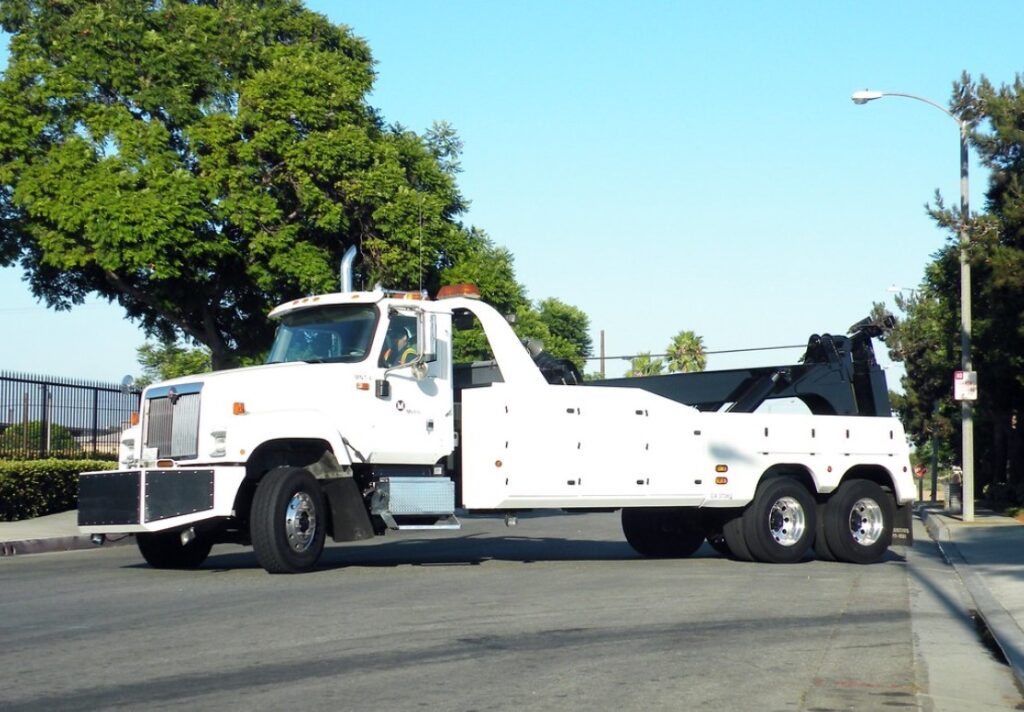
What all of these have in common is that a standard tow truck cannot handle them. The weight, size, and configuration of heavy machinery require a different class of equipment entirely, including lowboy trailers, rotator wreckers, and heavy-duty rigging gear. Attempting to tow construction equipment with an undersized truck is not only ineffective but can cause serious damage to the machine, the tow vehicle, or both.
Common Situations That Call for Construction Equipment Towing
Breakdowns on job sites can happen for any number of reasons, and the right towing or recovery approach depends heavily on the specific situation. Here are the most common scenarios:
- Mechanical failure on an active job site: Equipment that stops functioning mid-project and cannot be repaired on location needs to be transported to a service facility.
- Breakdown during transport between sites: If a flatbed or lowboy trailer carrying heavy machinery breaks down on a road like I-40 or US-1 near Raleigh, that quickly becomes a heavy duty recovery situation.
- Equipment stuck in mud, a ditch, or unstable terrain: This is a winch-out and recovery situation, not a standard tow. Getting the machine back on stable ground requires the right rigging setup and an experienced operator.
- Post-accident recovery: Equipment involved in a collision or rollover during road transport needs careful extraction before it can be safely moved.
- Planned transport between sites or to a repair facility: Not every equipment move is an emergency. Scheduled heavy equipment transport is a routine part of a contractor’s workflow, and the same care applies.
How the Construction Equipment Towing and Recovery Process Works
Understanding what happens from your first phone call to the moment your equipment is delivered can take a lot of the stress out of a breakdown. Here is a clear walkthrough of the process.
Step One: Assessing the Situation
Before any truck is dispatched, the towing company needs a clear picture of what they are dealing with. That means knowing the type of equipment, its approximate weight and dimensions, the exact location, and its current condition. Is it stuck, disabled, or damaged? Is the site on private property or along a public roadway? This information determines which recovery vehicle gets sent, so the more detail you can provide upfront, the faster and more efficient the response will be.
Step Two: Dispatching the Right Equipment
Not all heavy duty towing trucks are built for the same job. A skid steer being towed from a job site has different requirements than a 50-ton excavator stuck in a muddy trench. The right company will match the recovery vehicle to the specific equipment and situation. For construction machinery, that typically means a lowboy trailer for transport, a rotator wrecker for complex recoveries, and heavy-duty winch equipment for off-road or stuck-machine situations.
Step Three: The Recovery or Loading Process
Once the team arrives on site, the priority is securing the machine safely before anything moves. That involves proper rigging, load distribution, and in the case of extraction, a controlled winching process. This step takes the time it needs to take. Rushing a recovery on unstable ground or with improperly rigged equipment creates a far bigger problem than the one you started with.
Step Four: Transport and Delivery
After the equipment is loaded and secured, the towing company coordinates transport to the destination, whether that is a repair facility, another job site, or a storage yard. For oversized loads on North Carolina roads, this may involve securing the appropriate permits and following designated routes. Confirming the delivery address before departure keeps the handoff clean and avoids delays on the receiving end.
What to Look for in a Construction Equipment Towing Company
Choosing the right company before an emergency puts you in a much stronger position. Here are the key things to consider:
- Experience with heavy machinery specifically. General towing experience is not the same as knowing how to rig and recover a bulldozer. Ask whether the company regularly handles construction equipment, not just commercial trucks.
- The right fleet. A company offering construction equipment towing should have lowboy trailers, rotator wreckers, and proper rigging equipment available, not just a lineup of standard heavy duty wreckers.
- 24-hour availability. Breakdowns do not follow business hours, and your recovery service should not either.
- Local knowledge. A company familiar with Raleigh and the surrounding North Carolina area will understand local road conditions, weight restrictions, and permit requirements, which matters more than most contractors expect.
- Clear communication. A reliable towing company gives you a realistic timeline and keeps you informed throughout the process rather than leaving you guessing on the side of the road.
What Raleigh Contractors Should Have Ready Before a Breakdown Happens
The best time to prepare for an equipment breakdown is before it happens. A small amount of organization now saves a significant amount of scrambling later.
Keep a record of each piece of equipment that includes the make, model, weight, and overall dimensions. This is the first thing a towing dispatcher will ask for, and having it ready cuts response time significantly. Know the physical addresses and access routes for your active job sites so you can communicate them clearly when you are already under pressure. Make sure your site supervisors know who to call and exactly what information to provide.
Most importantly, save the number for a trusted heavy equipment towing company in Raleigh before something goes wrong. Straight Away Towing handles construction equipment towing across the Raleigh area and can be reached at (919) 234-5400.
The Bottom Line
Construction equipment towing is a specialized service that requires the right vehicles, trained operators, and a clear process from the first call to final delivery. Knowing how the recovery process works, what to look for in a provider, and how to prepare your team beforehand puts you in control of a situation that could otherwise be chaotic and costly. If your equipment breaks down or gets stuck on a job site in Raleigh or the surrounding area, Straight Away Towing is ready to help. Reach us at (919) 234-5400, and we will take it from there.